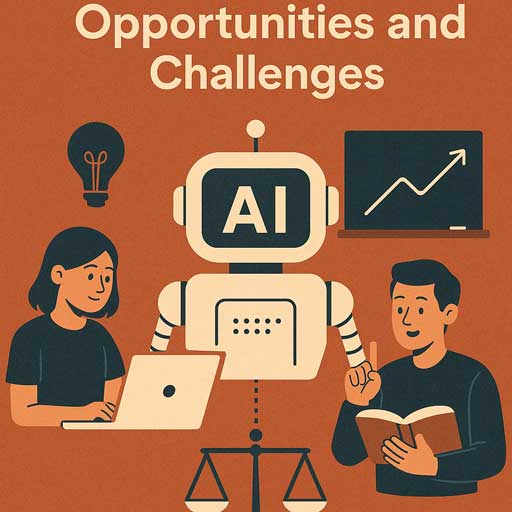

The rapid advancement of Artificial Intelligence (AI), particularly Large Language Models (LLMs) like ChatGPT, DeepSeek, and Gemini, is reshaping education globally. This technological wave presents both exciting opportunities and significant challenges for students and teachers alike. While students are increasingly leveraging AI tools, many teachers in Nepal report feeling unprepared to navigate this evolving educational landscape. This article delves into the impact of AI in classrooms, especially in schools located in cities of Nepal, exploring the concerns of educators, the potential benefits for learning, and the ethical considerations that must be addressed.
The Global Integration of AI in Classrooms
The integration of AI, especially LLMs, into classrooms is a widespread phenomenon. Studies indicate that a significant percentage of K-12 students use AI tools like ChatGPT weekly. These tools are changing how students approach various aspects of their learning.
Students are using AI for brainstorming and generating initial ideas for essays, projects, and research papers. AI is also becoming a primary tool for research and information gathering, helping students identify sources, summarize complex texts, and understand research findings efficiently. Furthermore, AI is significantly impacting the writing process, with students using it to generate drafts, revise their work, and even produce entire essays. In subjects like mathematics and computer science, AI chatbots provide step-by-step explanations for problem-solving. AI tools also offer personalized learning experiences, acting as virtual tutors that help students develop study plans and organize notes. Students are also using AI to generate practice questions for exam preparation. Beyond traditional academic tasks, AI is expanding students’ creative possibilities by supporting design, image generation, and music composition. In computer science, AI tools help students identify errors in programming projects and understand complex coding concepts.
Despite these benefits for students, the increasing use of AI has raised concerns among educators globally. Teachers report spending more time checking for AI-generated content and addressing unauthorized AI use. A significant worry is the potential for students’ reliance on AI to hinder the development of their creative thinking and problem-solving skills. Current plagiarism detection tools often struggle to identify AI-generated text, adding to teachers’ frustrations. The integration of AI is also increasing teachers’ workload as they revise lesson plans and address instances of suspected AI misuse. Many teachers feel ill-equipped to understand and integrate AI effectively into their teaching practices. Concerns also exist about AI spreading inaccurate or biased information and potentially reducing essential human interaction in the classroom.
The Dual Role of AI in Education
While AI presents challenges, it also offers significant potential benefits for both students and teachers.
For students, AI tools promise more personalized learning experiences, tailoring content and pace to individual needs. AI can also improve accessibility through features like text-to-speech, speech-to-text, and real-time translation. Students can leverage AI as efficient study tools for creating schedules, organizing notes, and summarizing information. Immediate feedback from AI-powered tools can help students identify strengths and weaknesses. AI provides greater access to a vast amount of information and educational resources and can offer valuable career guidance by analyzing job market trends.
For teachers, AI tools can automate administrative tasks such as grading, scheduling, and generating quizzes, freeing up time for more direct student interaction. AI can support personalized learning by helping teachers tailor content and identify struggling students. AI can also assist with content creation and curriculum design, helping generate lesson plans and assessment materials. Furthermore, AI can augment the feedback and assessment process and support teachers’ ongoing professional development by providing easier access to relevant educational resources.
The impact of AI on creativity and critical thinking is a subject of debate. AI can foster creativity by assisting with brainstorming and exploring new concepts. However, over-reliance on AI for generating content could hinder the development of original creative thinking. Engaging thoughtfully with AI can enhance critical thinking skills by requiring students to formulate effective prompts and evaluate AI-generated content. Conversely, excessive dependence on AI might lead to cognitive offloading, potentially weakening analytical and independent thinking.
Ethical Considerations for AI in Education
Responsible AI integration in education requires careful consideration of ethical frameworks. A human-centered approach should prioritize human inquiry and empowerment. Ethical frameworks emphasize fairness, transparency, and accountability in AI systems. Protecting student data privacy and security is paramount, as is recognizing and mitigating potential biases in AI algorithms. Developing strong AI literacy skills among both students and teachers is crucial. Educational institutions should develop clear policies and guidelines for responsible AI use. Upholding academic integrity requires redefining plagiarism to include the uncredited use of AI-generated content. Students should be encouraged to be transparent about their AI use. Teachers need to adapt assignments and assessment methods to emphasize critical thinking and educate students about the limitations of AI. Adopting a holistic approach to assessing student learning can also help mitigate AI misuse. It is essential to teach students to verify AI-generated information, identify biases, avoid over-reliance, address privacy risks, and prioritize human interaction in learning.
Cultivating AI Literacy: Training Programs
Comprehensive training programs for teachers and workshops for students are essential for cultivating AI literacy. Teacher training should provide hands-on experience with AI tools and practical integration strategies, address concerns about cheating and workload. Educational institutions should focus on building an understanding of AI concepts and ethics and offering ongoing support to teachers. Examples of successful programs include the AI in EDU Summit, Microsoft Learn, AI for Education, SchoolAI Basecamp, Penn GSE program, Code.org’s AI 101 for Teachers, Coursera courses, ISTE professional development, and Google AI for Educators.
Student workshops should make AI concepts accessible, develop practical skills in using AI tools and evaluating their outputs, emphasize ethical considerations, and teach critical analysis of AI-generated content. Initiatives like the Whitaker Center’s AI Literacy Workshops, AI for Education’s student workshops, CRAFT from Stanford University, and Innovative Educators’ micro-credential program are examples of efforts to enhance student AI literacy. Most of these resources are accessible online.
The AI in the Context of Kathmandu Valley, Nepal
In Kathmandu Valley, students are likely engaging with AI tools, mirroring global trends. However, teachers are less equipped than students in using AI effectively. While interviewing the teachers in Kathmandu Valley, they expressed frustration about students relying on AI instead of textbooks. While Nepal has made efforts to integrate ICT into education, challenges related to the digital divide, including internet access and digital literacy, likely persist. The government of Nepal has shown commitment to digital transformation in education, and organizations like UNESCO and the World Bank have supported Nepal’s educational development in areas relevant to AI integration. The fact remains unchanged that access to computers and the internet is limited to the students in the city, while students in remote villages remain unaware of this global revolution.
Conclusion
Integrating AI responsibly into the educational system is crucial for preparing students for the future. By addressing the concerns of educators, leveraging the benefits of AI, and establishing ethical guidelines, in-school regular training programs can empower both teachers and students to use AI effectively and ethically. This collaborative approach will be essential for navigating the evolving technological landscape and ensuring a high-quality and equitable education for all.
Table 1: Examples of AI Tools and Their Educational Applications
| Tool Name | Category | Primary Educational Uses |
|---|---|---|
| ChatGPT | LLM | Brainstorming, research, writing assistance, language learning, exam preparation, creative tasks, lesson planning, feedback |
| Gemini | LLM | Brainstorming, research, writing assistance, language learning, exam preparation, creative tasks, lesson planning, and feedback |
| DeepSeek | LLM | Brainstorming, research, writing assistance, language learning, exam preparation, creative tasks, personalized learning, content creation, and feedback |
| Khanmigo | Virtual Tutor | Personalized tutoring in various subjects, teaching assistant |
| QuillBot | Writing Tool | Paraphrasing, grammar checking, summarization, citation help |
| Magic School AI | AI Platform | Automated grading of paper-based, digital, and code assignments provides insights into student performance |
| Gradescope | Assessment | Lesson development, syllabus generation, discussion prompts, teaching assistant for IEPs, email writing, and accommodation lists |
| Eduaide | Content Creation | Lesson development, syllabus generation, discussion prompts, teaching assistant for IEPs, email writing, accommodation lists |
| Quizizz | Assessment | Lesson planning, IEP generation, student study guides, writing feedback, quiz creation, personalized learning, and administrative tasks |
Table 2: Ethical Considerations and Best Practices for AI in Education
| Ethical Principle/Best Practice | Description |
|---|---|
| Human-Centered Approach | Prioritize human inquiry, reflection, and empowerment; AI should augment, not replace human capabilities. |
| Fairness, Transparency, and Accountability | AI systems should operate fairly, be transparent in their processes, and be accountable for their outcomes. |
| Data Privacy and Security | Protect student data through secure practices and transparency about data collection and usage. |
| Addressing Bias and Promoting Inclusivity | Recognize and mitigate biases in AI algorithms and data to ensure equitable outcomes for all students. |
| Importance of AI Literacy | Students and teachers need to understand how AI works, its limitations, and its ethical implications. |
| Clear Communication of Policies and Guidelines | Educational institutions should establish and clearly communicate policies for responsible AI use. |
| Transparency and Disclosure | Students should be encouraged to be transparent about their use of AI in academic work. |
| Adapting Assignments and Assessments | Design tasks that emphasize critical thinking, personal reflection, and processes difficult for AI to replicate. |
| Teaching Limitations of AI | Educate students about potential inaccuracies, biases, and lack of originality in AI-generated content. |
| Focus on Learning Process | Assess understanding through various methods beyond traditional written essays. |
0 Comments